Evaluating the Colorful Oil Paint Strokes Pattern for Creative Projects
In the realm of digital design and surface pattern creation, texture plays a pivotal role in establishing visual interest and emotional resonance. Among the various textural options available to designers, the Colorful Oil Paint Strokes Pattern has emerged as a versatile asset for those seeking to infuse organic movement and artistic depth into their work. This article evaluates the characteristics, applications, and practical considerations of utilizing a seamless bundle of oil paint stroke textures, helping creators determine if this specific aesthetic aligns with their project goals.
Understanding the Aesthetic and Technical Composition
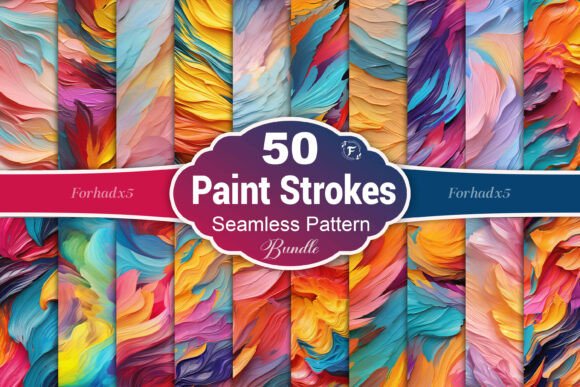
A Colorful Oil Paint Strokes Pattern is not merely a background image; it is a digital replication of traditional impasto techniques. Unlike flat vector graphics or uniform gradients, these patterns mimic the physical properties of oil paint, including viscosity, layering, and the visible marks of a brush or palette knife. When sourced as a high-resolution seamless bundle, such as a collection containing 50 JPG files at 2400×2400 pixels, the utility expands significantly.
The core appeal lies in the "seamless" feature. In textile and web design, a seamless pattern allows an image to be tiled horizontally and vertically without visible breaks or edges. This creates an infinite canvas effect, which is essential for large-scale applications like wallpaper or fabric printing. The RGB color mode ensures vibrancy on screens, while the high resolution provides sufficient detail for print mediums where DPI (dots per inch) matters. The hand-painted aesthetic offers a counterbalance to the often rigid, geometric nature of modern digital interfaces, introducing a sense of human touch and imperfection that many brands currently seek.
Strategic Applications Across Industries
The decision to integrate oil paint strokes into a project often depends on the intended message and medium. Below are key areas where this texture proves effective, along with an analysis of its fit.
Branding and Visual Identity
For businesses aiming to project creativity, luxury, or artisanal quality, the Colorful Oil Paint Strokes Pattern serves as a strong foundational element. In branding marketing, these textures can be used as subtle backgrounds for social media graphics or bold statements on advertising banners. The expressive motion of the strokes suggests dynamism and innovation. However, designers must exercise caution; when used behind text or logos, the high-contrast nature of oil paint can reduce legibility. It is often necessary to apply opacity masks or overlay solid color blocks to ensure the primary brand elements remain distinct.
Print Design and Stationery
In the context of physical products like business cards, invitations, and packaging inserts, the tactile illusion of oil paint adds perceived value. A greeting card featuring a vibrant, layered paint texture feels more personal and crafted than one with a standard digital gradient. For art prints and posters, the 2400×2400 pixel resolution allows for moderate-sized prints without significant pixelation, though large-format posters may require upscaling algorithms depending on the viewing distance. The organic nature of the strokes pairs exceptionally well with minimalist typography, creating a balanced composition between chaos and order.
Surface Pattern and Textile Design
This is perhaps the most natural fit for a seamless pattern bundle. Fashion designers and home decor specialists often look for motifs that translate well to fabric. The fluidity of oil paint strokes works beautifully on apparel such as scarves, leggings, and activewear, where the movement of the fabric complements the visual motion of the pattern. For home textiles like upholstery or curtains, the depth of the texture can hide minor wear and tear better than flat colors. Nevertheless, a critical consideration here is colorfastness and how the RGB values of the digital file translate to CMYK or specific dye lots in manufacturing. What appears vibrant on a monitor may shift when printed on cotton or silk.
Digital Products and User Interfaces
While less common in strict UI/UX design due to potential accessibility issues, these patterns are highly effective for website headers, presentation slides, and digital planners. They add warmth to digital environments that can otherwise feel sterile. For Canva templates and printable products sold on marketplaces, offering a "hand-painted" option diversifies a creator's portfolio. The trade-off is file size; high-resolution JPGs can increase load times if not optimized correctly for web use.
Benefits and Practical Trade-offs
Adopting a Colorful Oil Paint Strokes Texture Seamless Pattern Bundle offers several distinct advantages. Primarily, it saves time. Creating realistic oil paint textures from scratch in software like Photoshop requires significant skill and layering effort. A pre-made bundle of 50 variations provides immediate access to a wide range of color palettes and stroke directions, accelerating the prototyping phase.
Furthermore, the versatility of JPG files ensures compatibility across almost all design software, from industry standards like Adobe Illustrator to consumer-friendly tools like Canva. The repetitive yet non-uniform nature of the seams prevents the "grid look" that plagues lower-quality patterns, maintaining visual interest over large surfaces.
However, there are limitations to consider. JPG is a lossy compression format. While 2400×2400 pixels is substantial, repeated saving and editing can degrade quality. For projects requiring transparent backgrounds to layer over other images, PNG files would be superior, but JPGs force a rectangular boundary unless manually masked. Additionally, the "busy" nature of oil paint strokes means they are not suitable for every context. In situations requiring high readability or a corporate, conservative tone, these patterns may appear too distracting or informal.
Decision-Making Insights: Is This the Right Fit?
When evaluating whether to select this type of pattern bundle, creators should ask three fundamental questions regarding their project requirements:
- What is the emotional goal? If the objective is to evoke feelings of creativity, freedom, or artistic expression, the oil paint aesthetic is a strong contender. If the goal is precision, technology, or minimalism, a geometric or flat color alternative may be more appropriate.
- What is the output medium? For screen-based media, the RGB color profile is ideal. For large-scale physical printing, verify if the 2400px resolution meets the DPI requirements of the specific printer. For merchandise like mugs or phone cases, ensure the pattern scales without losing the nuance of the brushstrokes.
- How will it interact with other elements? Consider the hierarchy of the design. If the pattern is the hero, it can dominate the space. If it is a supporting element, ensure there is a method to mute its intensity so it does not compete with foreground content.
Alternatives and Final Considerations
While the Colorful Oil Paint Strokes Pattern offers a unique blend of tradition and modernity, it is not the only textural option. Watercolor textures offer a softer, more diffused look suitable for gentle branding. Grunge textures provide a rougher, edgier feel for streetwear or music-related designs. Vector-based abstract shapes offer scalability without resolution limits, making them better for massive billboards.
Ultimately, the choice depends on the specific narrative the designer wishes to tell. The oil paint stroke bundle represents a middle ground—structured enough to be a repeatable pattern, yet chaotic enough to feel alive and human. For designers working on merchandise, stationery, or digital assets that benefit from a hand-crafted appearance, this resource provides a robust foundation. By understanding the technical constraints of JPG formats and the visual weight of impasto styles, creators can leverage these patterns to elevate their work from generic to distinctive, ensuring the final product resonates with its intended audience.